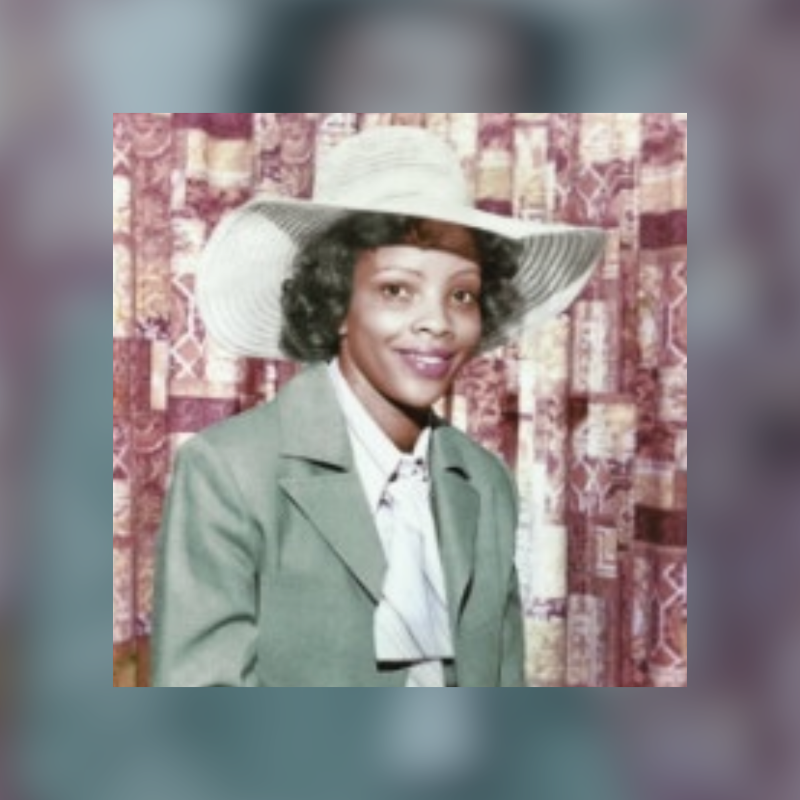
Estella Brantley’s murder should have been urgent from the beginning.
She was found in one of Bridgeport’s most visible public places, around witnesses who may have heard her final moments, with evidence that would one day matter more than anyone could have known when it was first collected. But for years, Estella’s case stayed unresolved, folded into a larger city-wide pattern of deadly attacks on women and families left wondering whether anyone was really fighting for them.
Then, decades later, science brought the case back to life. But Estella’s family was still left asking whether DNA told the whole story.
Discovery & Investigation
It was around 7:30 on the morning of October 30th, 1980 and a man was driving his girlfriend to work through Seaside Park in Bridgeport, Connecticut, when something in the grass caught his attention.
They were just passing the Perry Memorial Arch at the end of Park Avenue, close to where the road curves through one of the city’s most recognizable public spaces. Seaside Park stretches along Long Island Sound, a place meant for walking, picnics, baseball games, and ocean air. But that morning, just off the side of the road, among the trees and fallen leaves, the man thought he saw the shape of a person.
According to reporting by Daniel Tepfer for the Connecticut Post, the man pulled over and told his girlfriend to stay in the car while he went to check. He didn’t have to get very close before he knew his instinct was right. Less than 20 feet away, lying face down in the grass, was the body of a woman. He ran to call police from a pay phone near a hot dog stand.
When Bridgeport police arrived, they found the woman partially clothed. She was wearing a sweater and a navy peacoat, but her pants and underwear had been pulled down and were still caught around one leg.
There were small marks around her neck and a scratch on her left wrist. A broken necklace was found around her neck. Officers also found between $35 and $40 near her body, along with an empty wine bottle a few yards away, though police said they did not know whether the bottle had anything to do with her death.
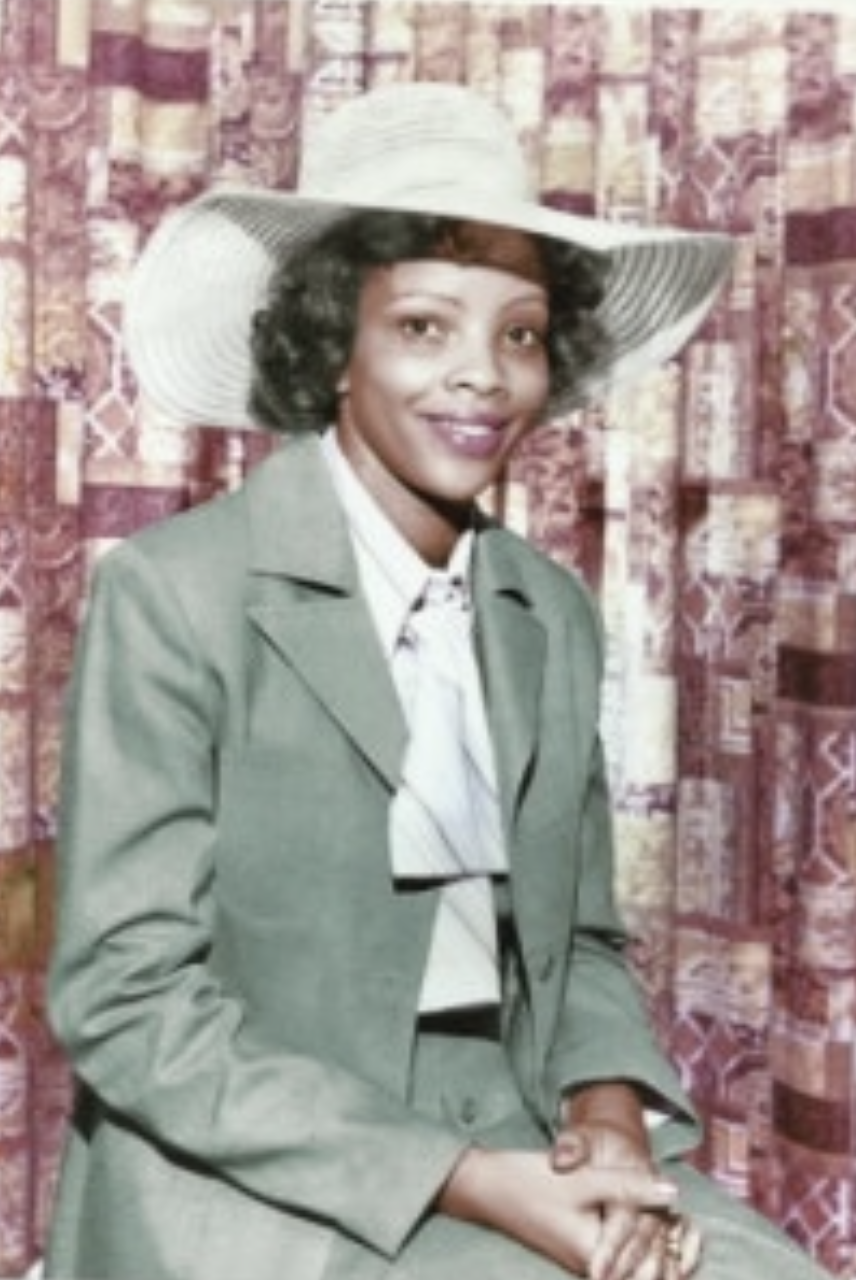
Police soon identified her through fingerprints as 30-year-old Estella Brantley.
The autopsy answered one of the first questions investigators had at the scene. Estella died of strangulation and the medical examiner placed her time of death at approximately 5:30 that morning, roughly two hours before her body was found in Seaside Park. She had fingernail impressions on the front of her neck, indicative of “classic manual strangulation,” meaning hands squeezing the neck.
Investigators also learned that Estella had engaged in sexual activity several hours before she died. But in 1980, that finding could only take them so far. Police said they were unable to determine whether she had been sexually assaulted, and DNA testing was not yet available to identify whose biological material had been recovered or what it meant for the case.
Without that kind of scientific answer, investigators had to build the timeline the old-fashioned way: who saw Estella, when they saw her, where she went, and who might have been with her in the hours before she was killed.
Police located witnesses nearby who may have heard Estella in her final moments. Students at the University of Bridgeport, which sits close to Seaside Park, later told police they heard a woman screaming in the early morning hours, which aligned with Estella’s estimated time of death. One student said the woman was yelling, “Oh God help me,” over and over again. But no one called police at that time.
So even early on, investigators had pieces. They had a location, a cause of death, a rough timeline, and people who may have heard the attack as it was happening. But none of that was enough to identify the person who killed Estella. And as the days passed, the urgency of the first response faded.
By the end of November, Estella’s case was still unsolved. The following month, the State’s Attorney’s Office asked Governor Ella Grasso to authorize a $20,000 reward for information leading to an arrest and conviction.
It was a significant reward, and a sign that investigators were trying to shake out new leads to progress the case. But Estella’s murder wasn’t viewed in isolation for long. In Bridgeport, women with similar vulnerabilities had been killed before her. And more would be killed after.
Other Cases
By the time Estella Brantley was killed in 1980, Bridgeport police had already been facing a troubling pattern for years.
Several women, many of them Black, many of them with known or suspected involvement in sex work, were found dead in different parts of the city. Some had been strangled. Some had been beaten. Some had been shot or stabbed. And while investigators did not publicly confirm that all of the cases were connected, the similarities were hard to ignore.
In fact, as early as July of 1977, Police Inspector Anthony Fabrizi told the Connecticut Post that investigators believed they might be dealing with a man who had encountered women in the same vulnerable circumstances before. He said police were gathering information from women on the street about earlier attacks, including accounts that suggested the attacker may have been driven by “sadomasochism” – violence, control, and the pleasure he took in hurting his victims.
One of those earlier victims was 20-year-old Anita Marie McIntosh.
Anita had come to Bridgeport from the Bronx just weeks before she was killed. According to reporting by Michael Mayko and Keila Torres Ocasio for the Connecticut Post, police believed that on the night of June 21st, 1977, Anita got into a white vehicle, likely near the former Hotel St. George on Congress Street, just a short distance from the Bridgeport Police Department.
Around 1:15 the following morning, two men flagged down firefighters returning from a call and told them there was a woman lying in the road on Silliman Avenue.
Anita was found with a plastic clothesline around her neck. Beneath it, police found a black stocking wrapped tightly around her throat. She had bruises on her body and rope burns on her wrists and legs, leading investigators to believe she had been restrained and sexually assaulted before she was killed. Police believed the attack happened somewhere else, and that Anita was then dumped at the spot where she was found.
Two years later, in August of 1979, 28-year-old Dora “Sissy” Ann Frazier Bailey was found dead in a vacant building at 156 Crescent Avenue. Dora had been shot once in the head. According to later reporting by Jack Dolan, she had one prior arrest for prostitution in 1975.
Then came Estella in October of 1980.
The following year, 23-year-old Gail Pettway was found brutally beaten but still alive in bushes near East Main Street and the Connecticut Turnpike. She died a little over a week later.
And in June of 1982, 27-year-old Carolyn Fay Harper was found bludgeoned to death inside a vacant three-story building on East Washington Avenue known as a hot spot for illicit activity. Carolyn’s clothes were in disarray and she suffered massive head injuries from a blunt instrument, but no weapon was recovered and no suspects were identified.
After Carolyn’s murder, Common Council President Ernest Newton said he planned to ask the Chief State’s Attorney’s Office and the Governor for help investigating not just Carolyn’s case, but the unsolved murders of Anita McIntosh, Dora Bailey, Gail Pettway, and Estella Brantley, too. Newton put the concern plainly, saying, “My concern was not what their profession was but that it was murder.”
If that request led to outside help, it did not lead to immediate answers. And it did not stop the violence.
By 1985, newspaper reporting described at least six open slayings of people involved in sex work in Bridgeport. That list included a new name, Denise Brady, whose skeletal remains had been found in Ninety Acres Park in December of 1984. Police had not determined Denise’s cause of death, but they considered her death a homicide.
Another case sometimes included in the broader group was that of 27-year old Unique Van Allen who was found shot to death in front of 108 Arctic Street in December of 1983.
In February of 1986, another woman was found dead in Seaside Park. Her name was Linda Heggs, also known as Linda Cooper. Karla Hudecek Moran and Gary J.M. McTrottes report for the Connecticut Post that 31-year old Linda and was found lying in a pool of blood near Grove Road, about 150 yards from the Perry Memorial Arch, the same general area of Seaside Park where Estella’s body had been found more than five years earlier.
Like several of the victims before her, Linda had a recent arrest for prostitution.
By 1987, Bridgeport police and members of the State’s Attorney’s Office had formed a task force to review eight killings over the previous decade that involved victims connected to sex work. The list included two newer cases: 15-year-old Melody Morales, who was stabbed on Kossuth Street in January of 1987 and died two days later, and 31-year-old Jacqueline Byrd, also known as Sharon Byrd and Jacqueline Blackwell, who was stabbed and dumped on East Main Street.
The task force reflected what families had already known for years: these cases could not be brushed aside as isolated tragedies. Even if every death was not connected to the same person, together they exposed how vulnerable these people were, and how little protection they had when someone decided they were disposable.
But even with police and prosecutors reviewing the cases together, the task force did not bring the answers families were waiting for. It eventually disbanded without resolving the killings, leaving Estella’s case and so many others in the same place they had been for years: open, unresolved, and waiting for someone to finally tell the truth.
Estella Brantley’s story continues on Dark Downeast. Press play to hear the full episode wherever you get your podcasts.
Episode Source Material
- Police identify dead woman, Bridgeport Telegram, 31 Oct 1980
-
Police seek identity of woman’s rescuers, Connecticut Post, 31 Oct 1980
-
Woman strangled, autopsy shows, Connecticut Post, 4 Nov 1980
-
Obituary: Miss Estella L. Brantley, Connecticut Post, 5 Nov 1980
-
Card of Thanks, Connecticut Post, 19 Nov 1980
-
Ella asked to okay reward, Connecticut Post, 2 Dec 1980
-
O’Neill approves rewards in 3 state murder cases, Associated Press via The News-Times, 2 Mar 1981
-
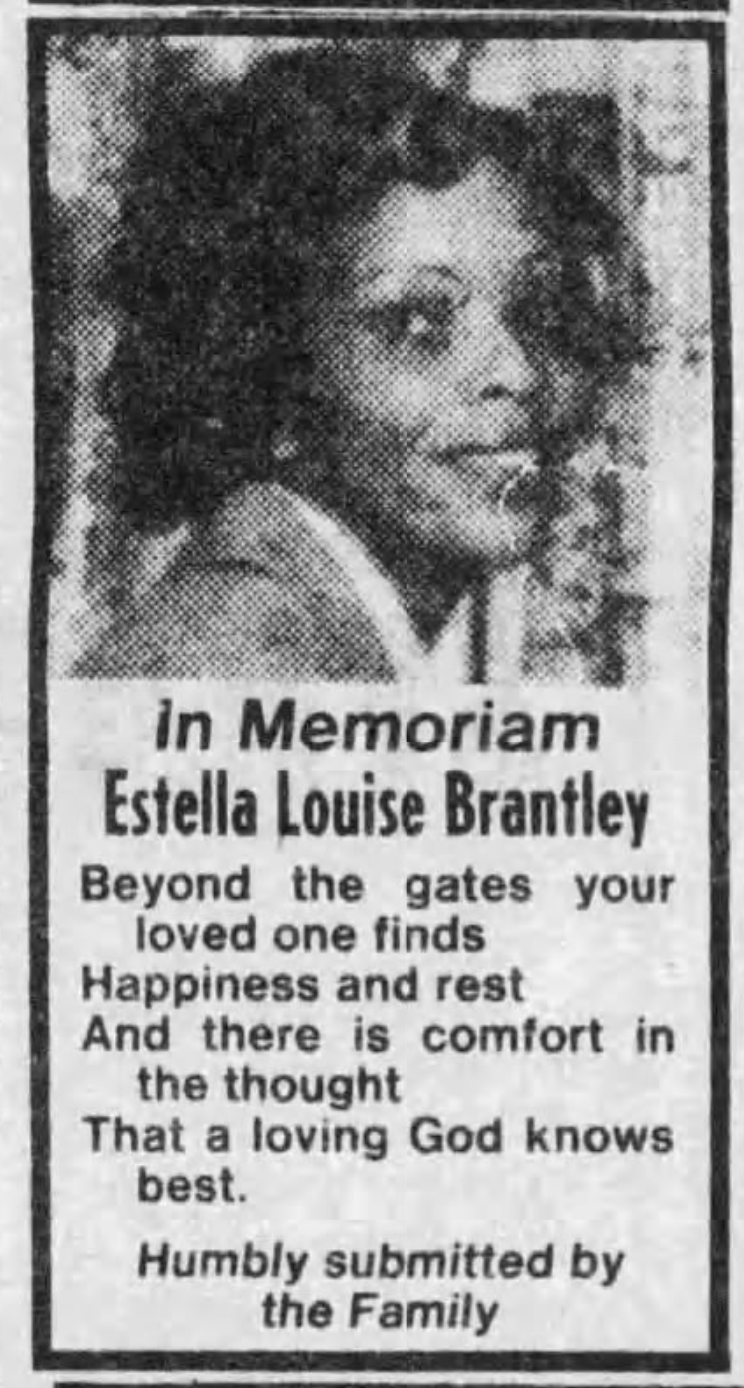
In Memoriam: Estella L. Brantley, Connecticut Post, 30 Oct 1981
-
Read St. woman named murder victim by Jack Dolan, Connecticut Post, 5 Jun 1982
-
Council leader presses probe of murder case, Connecticut Post, 9 Jun 1982
-
In Memoriam: Estella Louise Brantley, Connecticut Post, 30 Oct 1983
-
Prostitutes ‘fair game;’ 6 slayings open by Catherine Clabby, Connecticut Post, 20 Aug 1985
-
Prostitute, 31, found dead in Seaside Park by Karla Hudecek Moran and Gary J.M. McTrottes, Connecticut Post, 27 Feb 1986
-
Eight prostitute slayings in city focus of police, state task force by Pete Mastronardi, Bridgeport Telegram, 24 Jul 1987
-
Cop on trial says informant told him sergeant killed 2 prostitutes by Daniel Tepfer, Bridgeport Telegram, 18 May 1988
-
Lawson claims informant could link cop to killing of prostitutes by Daniel Tepfer, Connecticut Post, 18 May 1988
-
Series of deaths launches 2 probes by Daniel Tepfer, Connecticut Post, 18 Jan 1993
-
Deputy chief shelved over info use by Joel C. Thompson, Connecticut Post, 15 Nov 2003
-
Bridgeport police veteran retires after 36 years on force by Aaron Leo, Connecticut Post, 25 May 2005
-
Bridgeport deputy chief put on paid leave as criminal allegation probed, Connecticut Post, 25 May 2011
-
Deputy chief put on paid leave, The News-Times, 25 May 2011
-
Honis complaint focuses on old murder case by Michael P. Mayko and Keila Torres Ocasio, Connecticut Post, 26 Jun 2011
-
City police union files grievance over Deputy Chief’s leave by Michael P. Mayko, McClathy-Tribune Regional News, 13 Jul 2011
-
Dead prostitute at center of FBI probe of police official by Michael Mayko and Keila Torres Ocasio, Connecticut Post, 14 Jul 2011
-
Can forensics help? ‘77 murder at center of FBI probe by Michael P. Mayko and Keila Torres Ocasio, 31 Jul 2011
-
Suspended deputy chief to get hearing by Michael P. Mayko, Connecticut Post, 21 Feb 2012
-
Honis still on payroll by Keila Torres Ocasio, Connecticut Post, 24 Mar 2012
-
Honis, city reach agreement, stays on payroll by Keila Torres Ocasio, Connecticut Post, 24 Mar 2012
-
DNA match found by Daniel Tepfer, Connecticut Post, 17 Aug 2012
-
Inmate charged in 1980 killing by Dave Collins, Associated Press via The Bulletin, 17 Aug 2012
-
Long-awaited justice, Connecticut Post, 21 Aug 2012
-
Accused killer gets hearing by Daniel Tepfer, Connecticut Post, 29 Aug 2012
-
Union: Suspended deputy police chief could return to job by Keila Torres Ocasio, Connecticut Post, 20 Mar 2013
-
Suspended deputy chief coming back, Connecticut Post, 3 May 2013
-
Paid leave ends for deputy police chief by Denis J. O’Malley, Connecticut Post, 7 May 2013
-
Bridgeport cold case death trial to begin by Daniel Tepfer, Connecticut Post, 20 Oct 2014
-
Cold-case murder trial gets underway by Daniel Tepfer, Connecticut Post, 22 Oct 2014
-
Solving the unsolvable by Daniel Tepfer, Connecticut Post, 23 Oct 2014
-
Cold case murder trial heats up by Daniel Tepfer, Connecticut Post, 24 Oct 2014
-
Murder trial jury hears recorded confession by Daniel Tepfer, Connecticut Post, 25 Oct 2014
-
Judge sends cold case to jury by Daniel Tepfer, Connecticut Post, 29 Oct 2014
-
Cold-case jurors rehear trial testimony by Daniel Tepfer, Connecticut Post, 30 Oct 2014
-
Cold-case murder jury struggles with verdict by Daniel Tepfer, Connecticut Post, 31 Oct 2014
-
Verdict: not guilty by Daniel Tepfer, Connecticut Post, 1 Nov 2014
-
Jackson acquitted in 1980 cold case murder by Daniel Tepfer, Connecticut Post, 1 Nov 2014
-
Deputy chief quits on own terms by Brian Lockhart, Connecticut Post, 27 Mar 2017