Some cases linger for years not because the truth is hidden, but because the tools needed to prove it aren’t yet strong enough. Evidence waits on shelves, memories shift, and flawed forensic science can steer an investigation away from the person who seemed suspect from the start. This is one of those cases.
This is a story about a young woman whose life was brutally taken and the decades that followed as investigators, family members, and forensic experts worked to overcome outdated science and finally confirm what so many had suspected all along.
The Press Conference
The room settled into a hush just before the announcement began. At the front of the packed space, the state’s top officials stood shoulder to shoulder in a line of investigators whose careers spanned different eras of policing. Some had gray at their temples, while others were probably not even born yet when the case at the center of the press conference first broke. All were gathered for the same reason. After fifty years, New Hampshire authorities were finally ready to close the homicide investigation of Judith “Judy” Lord.
Attorney General John Formella stepped to the podium, greeted by the soft shuffle of cameras lifting into place. He thanked the crowd, then spoke plainly. After five decades, he said, they were here to announce the resolution of a case that had haunted a family and unsettled a community.
Judy’s relatives, including some of her surviving siblings, sat in the front row as officials acknowledged their loss and their patience. Her son, just a toddler when she was killed, listened in virtually.
It was clear that the day belonged to Judy’s family and to the many people who had refused to let her story slip from memory. The words closure and truth were used carefully, as if everyone in the room understood how fragile those promises can be.
The case had traveled across generations of detectives and scientists. New techniques eventually met old evidence, and persistence had outlasted the obstacles that once stopped the investigation cold. The wait for resolution was finally over, but what that resolution revealed was quietly devastating. This case could have been solved a lifetime ago.
This story begins on an ordinary morning in the spring of 1975, when the quiet of a Concord apartment complex was broken by the sound of a crying child.
May 20, 1975
It was 12:20 p.m. on May 20, 1975 and the operations manager of the Concord Gardens Apartments in Concord, New Hampshire stood at the door of Apartment 4 in Building 19, knocking for what felt like the umpteenth time. The tenant, 22-year-old Judith “Judy” Lord, was behind on her rent, and he had stopped by to collect it.
Each knock was met with no response from the other side of the door, just the unmistakable sound of a baby crying. It carried through the apartment, thin and persistent, making it impossible to believe no one was home. But the door remained still, and no footsteps approached from within.
Both the front and back doors were locked. With unease growing, the manager retrieved a spare key and let himself inside, guided less by the overdue rent and more by the child whose cries had gone on for hours.
The apartment manager climbed the stairs toward the bedrooms and found the answer to why no one had come when he knocked. Judy’s one-year-old son was safe in his crib in the adjoining room, but Judy herself lay lifeless in her bed, the scene revealing at once that something terribly violent had happened there.
The Scene & Autopsy
Judy was lying on her back in bed. A single unsmoked but crumpled cigarette rested on top of the bedspread. Beneath the bedding, she was nude, her face covered with a blue plastic sauna suit.
Her bedroom told an unmistakable story of struggle. A mirror and a lampshade had been knocked over. A green curtain appeared torn from the window. The bed had been pulled away from the wall. On the floor, an alarm clock lay where it had fallen, its hands frozen at 1:47, a silent marker of the chaos that had unfolded and the first clue of when exactly the violence had taken place.
In the bathroom, small details hinted at the moments before the attack. The toilet seat was left up. The clothes Judy was known to be wearing the night before, a pair of jeans and red underwear, were left on the bathroom floor.
The New Hampshire State Police Forensic Lab processed the apartment the next day, May 21, collecting an overwhelming amount of physical evidence. From Judy’s room, technicians seized bedding, two towels from the floor, Judy’s purse, and the blue plastic sauna suit.
One of the towels, a purple one, was still damp but showed hardened stain areas consistent with semen. The white towel beside it bore similar stains. Investigators theorized that because the towels were still wet while the presumed semen stains had already dried, a sexual act likely occurred after someone, possibly Judy, showered and used the towels to dry off.
As investigators continued processing the scene, they discovered five latent fingerprints on the front window of Judy’s apartment. Their placement suggested someone had pushed or slid the window open from outside. Since the front and back doors were found locked and no other signs of forced entry appeared, investigators concluded that the intruder likely entered through that window.
Dr. Merritt Moon performed Judy’s autopsy, beginning with a careful examination of her external injuries. He documented multiple scratch marks and abrasions on her face and neck, along with dried blood on the inside of her upper lip near the right corner of her mouth.
Internally, Judy’s injuries were textbook indicators of strangulation. She had hemorrhaging within the muscles and fascias of her neck and small blood clots along the left side of her larynx. Dr. Moon also noted evidence suggesting the attacker may have held plastic material over Judy’s nose and mouth with their left hand, a detail that aligned with the blue plastic sauna suit found covering her face at the scene.
The doctor observed what appeared to be semen within Judy’s body, though did not specifically link this finding to the timing of the assault.
The physician collected five hairs during the autopsy: One from her lower abdomen, a single stray hair from the palm side of her middle finger on her left hand, as well as three hairs from the bed sheet she was laying on. Other evidence collected as part of the autopsy included fingernail scrapings and vaginal fluid samples.
By the time the scene work and autopsy were complete, investigators were left with a stark portrait of Judy’s final moments. The violence was clear. What came next required stepping away from that bedroom and returning to the world Judy had been part of just hours earlier to understand the routines she kept, the people she relied on, and the life she was trying to rebuild.
This is an excerpt from the full episode covering the case of Judith Lord. Press play wherever you get your podcasts to hear Judith’s story on Dark Downeast.
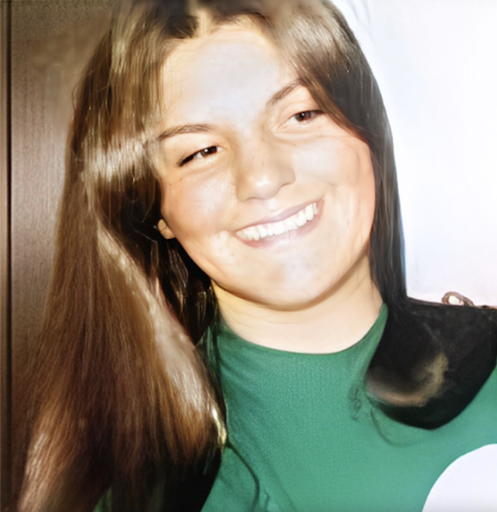
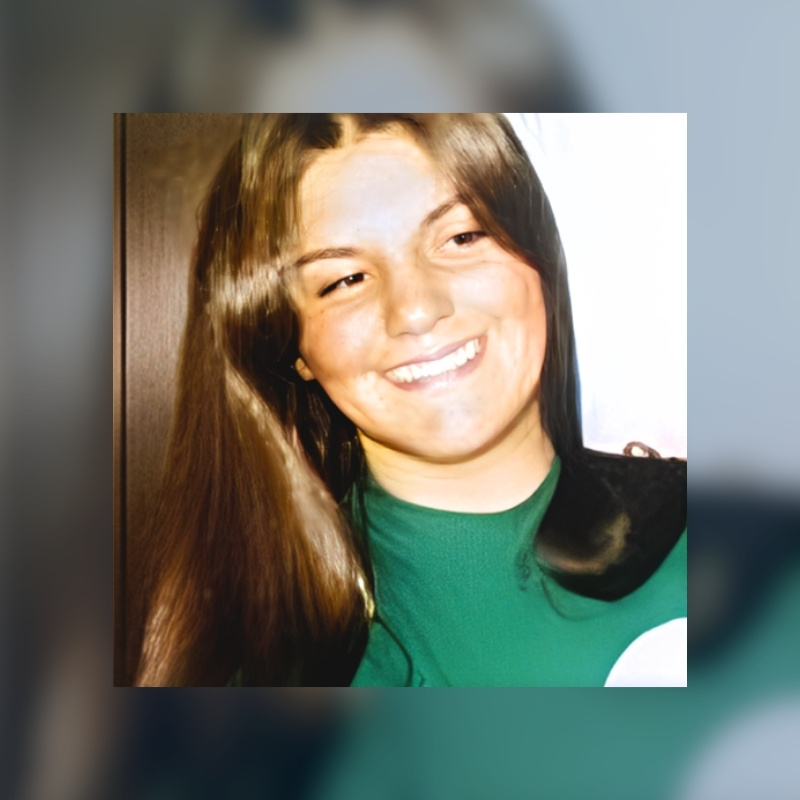
Judith “Judy” Lord. Photo enhanced by the New Hampshire Attorney General’s Office

One of the last known photos of Judy Lord taken May 17, 1975. Source: New Hampshire Attorney General’s Office

One of the last known photos of Judy Lord taken May 17, 1975. Source: New Hampshire Attorney General’s Office

One of the last known photos of Judy Lord taken May 17, 1975. Source: New Hampshire Attorney General’s Office
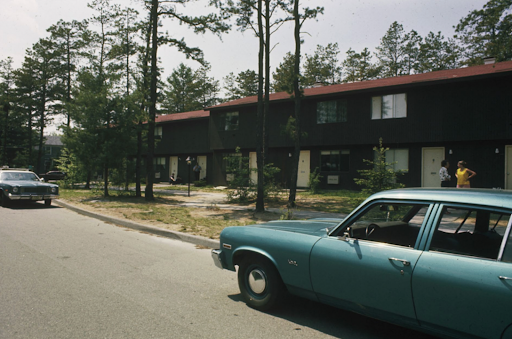
Concord Gardens apartment complex circa 1975. Source: New Hampshire Attorney General’s Office
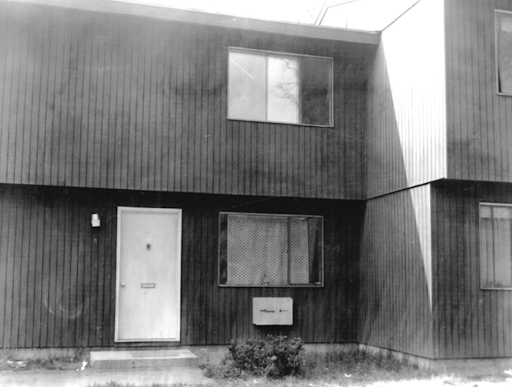
Judy’s apartment at Concord Gardens. Source: New Hampshire Attorney General’s Office
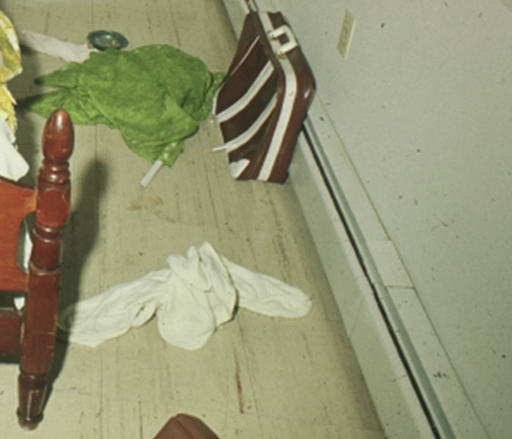
Signs of a struggle inside Judy’s bedroom. Source: New Hampshire Attorney General’s Office
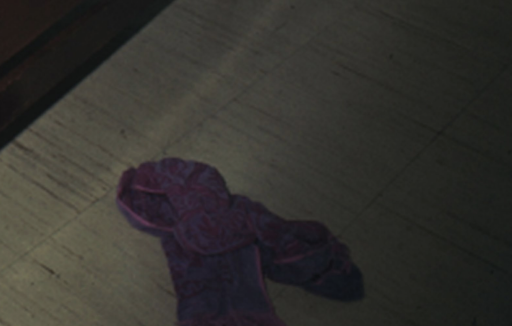
This purple towel became critical evidence decades later. Source: New Hampshire Attorney General’s Office
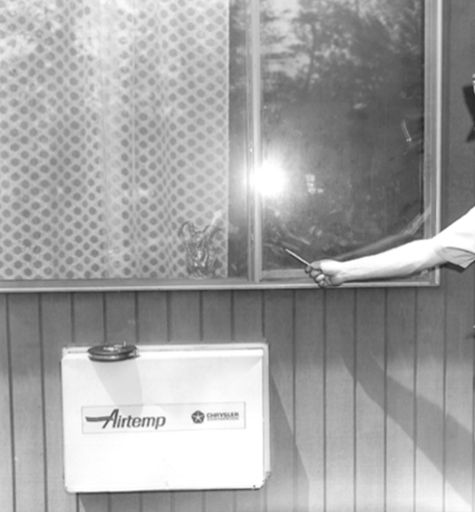
Fingerprints on the window of Judy’s apartment. Source: New Hampshire Attorney General’s Office
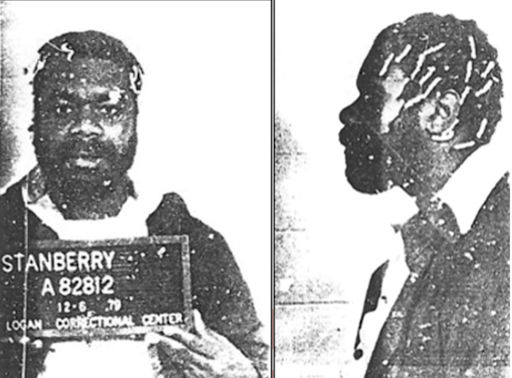
Ernest Theodore Gable AKA Ernie Stanberry. Source: New Hampshire Attorney General’s Office
Episode Source Material
- Attorney General’s Report Regarding the May 20, 1975 Murder of Judy Lord in Concord, New Hampshire, New Hampshire Attorney General John Formella, released 24 Nov 2025
- Concord death may be murder, Associated Press via the Nashua Telegraph, 21 May 1975
- Concord Heights woman found Slain by Steven Pearlstein, Concord Monitor, 21 May 1975
- Plastic bag used to slay woman, New Hampshire Union Leader, 22 May 1975
- No arrests in sight in Judy Lord slaying by Steven Pearlstein, Concord Monitor, 22 May 1975
- Judy Lord slaying: No arrest, Concord Monitor, 27 May 1975
- Hair, blood samples refused police in Lord slaying probe by Steven Pearlstein, Concord Monitor, 14 Jun 1975
- Court hears Lord case, Concord Monitor, 6 Nov 1975
- Lord slaying hair, blood studied, Concord Monitor, 4 Dec 1975
- Getting away with murder by Barbara Strauch, New Hampshire Union Leader, 11 Dec 1977
- Cases in which killers remain free by Linda Goetz, Concord Monitor, 30 Aug 1989
- Time, technology can help crack cold cases by Sarah C. Vos, Concord Monitor, 8 Mar 2003
- Police seek clues to cold cases by Annmarie Timmins, Concord Monitor, 19 May 2005
- Old complex, new attitude by Annmarie Timmins, Concord Monitor, 29 May 2005
- AG: FBI error delayed identifying Judy Lord’s killer for 50 years, InDepth NH, 24 Nov 2025
- Original suspect confirmed as killer in 1975 Concord murder: FBI analysis wrongly excluded Judy Lord’s killer by Kevin Landrigan, New Hampshire Union Leader, 25 Nov 2025
- No arrests in Lord slaying, Concord Monitor, 3 Sep 1975
- Supreme Court gets Lord case, Concord Monitor, 21 Oct 1975
- Bag of bones, abandoned love seat by Deborah DePeyster, Concord Monitor, 31 Mar 1977
- Obituary: Maurice C. Arnold, Concord Monitor, 24 Jun 1994
- Making sure she will never be forgotten by Allison Steele, Concord Monitor, 18 Apr 2003
- State of New Hampshire v. John Doe. No. 7331. Supreme Court of New Hampshire. Dec. 3, 1975.