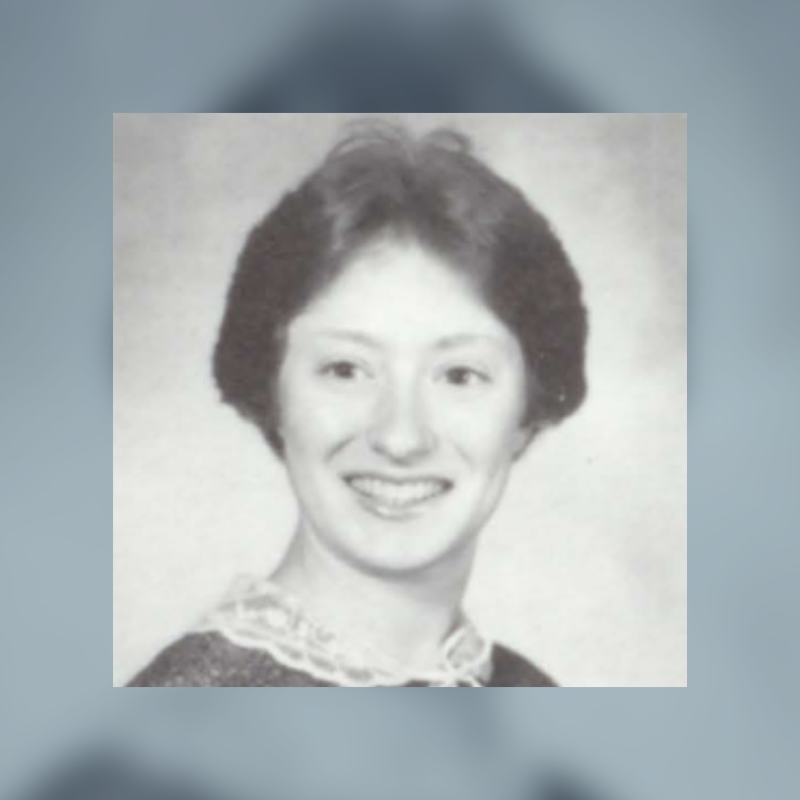
On a summer weekend in 1982, Barre, Vermont was crowded with music, traffic, and thousands of people moving through town for an annual festival. Somewhere in that noise, an 18-year-old woman disappeared.
In the days that followed, investigators tried to make sense of what little they had: fragments of sightings, possible suspects, conflicting leads, and tests that seemed to narrow the field. But the case did not move cleanly from suspicion to arrest.
Decades later, the same investigation that was first shaped by uncertainty was reopened by science. And this time, the evidence pointed back to someone investigators had once left behind.
The Night of July 17, 1982
On a summer night in Barre, Vermont, the area around St. Monica’s School would not necessarily have been quiet.
The school sat near Summer Street, close to a wooded area kids were known to cut through after dark. For people who lived nearby, late-night noise was not unusual. They often heard voices or car doors slamming, the tell-tale sounds of empty beer bottles clinking together against the ground. At times even yelling that sounded, at first, like nothing more than young people passing through the neighborhood.
Sometime overnight and into the early hours of July 17, 1982, a woman who lived near the school heard a yell.
According to Tom Sivert’s reporting for The Times Argus, the woman did not get up to check the time. She did not immediately think something terrible had happened. At first, she thought it was probably a teenage couple, or someone teasing someone else as they moved through the woods. The kind of sound that could be easy to dismiss in a neighborhood where noise after dark was not out of the ordinary.
But soon, that sound would take on a much darker meaning.
Around noon that Saturday, children searching for returnable bottles found the partially nude body of a young woman. She was lying at the bottom of a wooded hill behind St. Monica’s School. From the condition of the scene, investigators quickly believed they were dealing with a homicide.
Police believed she had been there since the early morning hours. A report by Dan Gillmor for the Rutland Herald later said she may have died six to twelve hours before she was found, but the extreme summer heat complicated any precise estimate. Temperatures reached around 90 degrees that weekend.
The location of her body only deepened the challenge of the investigation. That same weekend, Barre was hosting its annual Ethnic Heritage Festival. Just one block away from where the young woman was found, part of the town’s streets had been closed off for the celebration. The festival had begun Friday night and continued past midnight, bringing thousands of extra people into the area.
In fact, when law enforcement were notified about the body, the festival parade was underway.
The crowds, the noise, the late-night movement of people through town, all of it may have helped conceal what happened. And if anyone saw something important, they may not have realized it at the time.
Not far from the woman’s body, investigators found a pair of jeans and a pair of glasses. There was no purse nearby, and no identification either so at first, police did not know who this woman was. John Taylor reports for the Burlington Free Press that investigators checked missing persons reports in town and neighboring communities, but nothing matched.
As word of the discovery moved through Barre, one family began to fear the worst. Their daughter and sister, 18-year old Pamela Brown went to the festival the night before but never made it home.
As talk of a murder spread through town, Pamela’s family sent one of her brothers to the Barre Police Department with a photograph. That’s when police confirmed: The young woman found behind St. Monica’s School was Pamela Brown.
About Pamela Brown
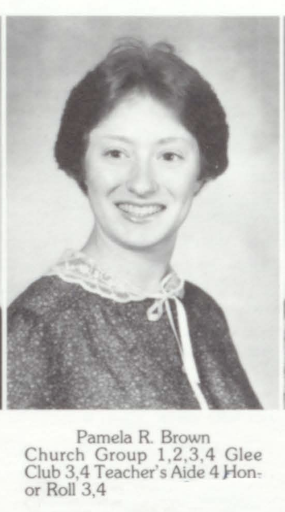
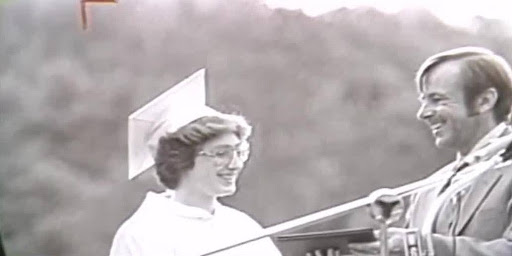
Pamela was at the very beginning of her adult life. She had graduated from Spaulding High School in Barre just two months before, and she hadn’t simply made it through school; she graduated with honors.
By the summer of 1982, she was in that brief, delicate window between high school and whatever came next. That fall, Pamela was planning to attend Burlington Technical School. Her life was moving forward. She had plans and a future she was preparing for.
At Spaulding High, Pamela was part of the glee club and a church group. She was described as a church-going Christian, and by all accounts, her faith was an anchor. It shaped the way she moved through the world and the way she treated other people.
She volunteered at Central Vermont Hospital and at school, she worked as a teacher’s aide, helping other students who were struggling in class. Even at 18, she seemed rooted in service and care.
And that is part of what made her death so difficult for Barre to absorb. Her family and the community grappled with the impossible question: How could something so violent have happened to someone remembered, almost universally, for being so gentle?
Investigation
In the first hours after Pamela Brown was identified, investigators were working with two urgent questions at once. The first was physical: what had happened to her? The second was logistical: how had it happened in the middle of a crowded festival weekend, in a place with so much foot traffic, so much noise, and so many people moving in and out of town?
At first assessment, Vermont’s Chief Medical Examiner, Dr. Eleanor McQuillen, said Pamela did not appear to have significant bruises or injuries, but the circumstances of Pamela’s death were already pointing in one clear direction. The autopsy confirmed Pamela died by ligature strangulation, and police said the ligature was a piece of her own clothing, described as the cord, drawstring, or belt from her blouse.
Police would not release the full autopsy findings. They said they were holding back details to protect the integrity of the investigation. They would not confirm whether Pamela had been sexually assaulted. Nor would they confirm or deny whether they believed more than one person had been involved.
Pamela’s father Elmer told detectives that he dropped his daughter off at the festival on Friday night and she was supposed to meet up with some friends. However, according to witnesses, at some point between 9:30 p.m. and midnight she separated from the people she had been with. When her father returned to pick Pamela up, she didn’t show.
That left investigators with a narrow but complicated window of time. They needed to know who saw Pamela after 9:30 that night. They needed to know where she went, who she was with, and how she ended up behind St. Monica’s School. But the festival made all of that harder.
Thousands of extra people were in Barre that weekend, with later reporting by Derek L. Kinner for the Rutland Herald putting the crowd between 25,000 and 30,000. Many were from outside the community, and the St. Monica’s parking lot had been used for festival parking, putting countless cars and people near the area where Pamela was later found.
In a smaller, quieter setting, someone walking with Pamela might have stood out. A scream might have drawn attention. A suspicious person leaving the area on foot might have been remembered immediately. But on festival weekend, so much could blend into the background.
There was another issue, too. Some of the earliest leads were confusing, and not all of them led somewhere useful.
At one point, police looked into whether Pamela’s death might have any connection to a car that was reported stolen from a parking spot less than a block from where her body was found. But according to police, the car had not actually been stolen. They said the owner had simply forgotten where it was parked.
On the other hand, the owner strongly disputed that he simply misplaced his vehicle. He told Sarah Wilson of the Times Argus that his car had been within view of the scene of the murder when he left it, but it was later found about a quarter-mile away. He also claimed witnesses had seen four youths get into the car and drive away on the night of Pamela’s murder.
The owner also claimed there were scratches that looked like someone had used a coat hanger to break in through a window he had left slightly cracked.
Barre Police Chief Joseph Morrison insisted there was no possible connection between the car and Pamela’s murder, though he did not elaborate on what convinced him of that conclusion. Washington County State’s Attorney Gregory McNaughton, meanwhile, denied there were signs of forced entry and indicated there was no other physical evidence the car had actually been stolen.
Investigators said they had spoken with witnesses who claimed the car had been where it was found, on Elm Street, since at least 6 p.m. that Friday. Police also noted the car had not been hot-wired, and the keys were not inside.
Still, the owner was uncomfortable enough that he parked the car in his garage and left it untouched for several days, in case it later needed to be processed for evidence.
It was just one of several threads investigators had to pull at while trying to separate rumor, fear, coincidence, and fact.
In the days after Pamela’s murder, police also administered at least one polygraph test right off the bat. The man who took it was described in reporting as being “involved” in another case from about a month earlier…A case with some disturbing similarities.
In that incident, a partially nude female victim had been found beaten but alive on the steps of a local church. That case was still under investigation at the time but reporting suggests police expected to rule that individual out in Pamela’s case, despite any perceived similarities.
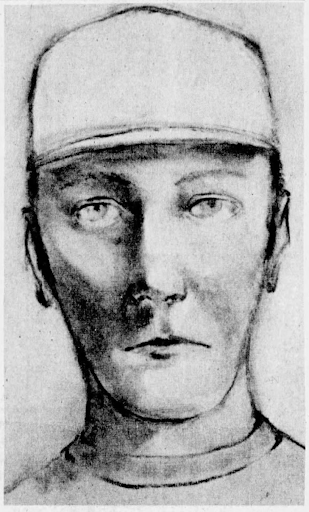
A little over a week into the investigation, Champlain Valley Crime Stoppers released a reenactment, hoping it would generate new leads. With it, police made a specific public request. They wanted to hear from anyone who saw Pamela after 9:30 p.m. on Friday, July 16. They also wanted tips about anyone seen leaving the Barre area on foot or hitchhiking.
Maybe investigators were considering the possibility that Pamela’s killer had slipped away without a car. Maybe through the festival crowd. Maybe through the dark streets around St. Monica’s. Maybe by catching a ride out of town before anyone even knew a young woman had been killed.
The challenge was that in a city full of visitors, any one of those possibilities could have been true. And somewhere in all of that movement – the music, the crowds, the parked cars, the late-night noise that neighbors had learned to ignore – was the answer to what happened to Pamela Brown.
Pamela Brown’s story continues on Dark Downeast. Press play to hear the full episode wherever you get your podcasts.
Episode Source Material
- 18-year-old found strangled in Barre by John Taylor, Burlington Free Press, 18 Jul 1982
- Barre woman is murdered by Dan Gillmor, Rutland Daily Herald, 18 Jul 1982
- Murder probe goes on, Staff/Wire Reports, Times Argus, 19 Jul 1982
- Barre murder probe continues by Vyto Starsinskas, Rutland Daily Herald, 19 Jul 1982
- 18-year-old girl killed by Kevin Goddard, Brattleboro Reformer, 19 Jul 1982
- Friends remember slain teen as a generous, kind person by Kathleen M. Norton, Bennington Banner, 21 Jul 1982
- Lie detector test expected to rule out Barre suspect by John Taylor, Burlington Free Press, 21 Jul 1982
- Victim recalled as shy, good-natured girl by Kathleen M. Norton, Burlington Free Press, 21 Jul 1982
- Police refuse to make autopsy results public by John Taylor, Burlington Free Press, 22 Jul 1982
- A murder darkens Barre’s big festival, Rutland Daily Herald, 25 Jul 1982
- Pamela Brown slaying re-enacted, Burlington Free Press, 26 Jul 1982
- Owner of ‘stolen’ car raps cops by Sarah Wilson, The Times Argus, 29 Jul 1982
- Neighbors and night sounds by Tom Sivert, The Times Argus, 29 Jul 1982
- Police seek murder suspect by Sarah Wilson, The Times Argus, 30 Jul 1982
- Murder suspect sketched by Sarah Wilson, The Times Argus, 31 Jul 1982
- Forty callers respond to police sketch of man, Associated Press via Burlington Free Press, 3 Aug 1982
- Police make tentative ID, Rutland Daily Herald, 6 Aug 1982
- Investigators pulling back on murder case by Sarah Wilson, The Times Argus, 6 Aug 1982
- Legal barriers shield murder suspects by Tom Watkin, The Times Argus, 13 Aug 1982
- Murder suspect cleared, The Times Argus, 26 Aug 1982
- One year later: No killer found in Barre murder by Derek L. Kinner, Rutland Daily Herald, 16 Jul 1983
- Unsolved murders baffle authorities by Lois Webby, Rutland Daily Herald, 18 Jan 1985
- Death certificate reveals that Barre girl was strangled by David Delcore, The Times Argus, 31 Oct 2000
- Police: DNA links man to 1982 murder in Vt. by Wilson Ring, Rutland Daily Herald, 18 Feb 2009
- DNA links Barre man to killing by Wilson Ring, Associated Press via Burlington Free Press, 18 Feb 2009
- Murder suspect pleads not guilty by Wilson Ring, Associated Press via Burlington Free Press, 19 Feb 2009
- Man pleads innocent to woman’s 1982 murder, Associated Press via Rutland Daily Herald, 19 Feb 2009
- Vt. man pleads not guilty to woman’s 1982 murder, Associated Press via Bennington Banner, 19 Feb 2009
- The Cold Cases: Around the state, 23 unsolved murders remain by Peter Hirshfield, Rutland Daily Herald, 22 Feb 2009
- Brown investigation put polygraph to the test by Thatcher Moats, Rutland Daily Herald, 22 Feb 2009
- 1982 murder suspect linked to history of violent attacks by Sam Hemingway, Burlington Free Press, 24 Feb 2009
- Police: Suspect attacked others, Associated Press via Brattleboro Reformer, 25 Feb 2009
- Pamela Brown murder: Details emerge in suspect’s past by Thatcher Moats, The Times Argus, 25 Feb 2009
- Caron sentenced in Brown murder, The Times Argus, 30 Dec 2009
- Man admits Barre killing, Burlington Free Press, 31 Dec 2009
- VINE Inmate Record: Theodore Clifford Caron
- United States v. Scheffer, 523 U.S. 303, U.S. Supreme Court, 1998.
- National Research Council, The Polygraph and Lie Detection, National Academies Press, 2003.
- State v. Crafts, 226 Conn. 237, Connecticut Supreme Court, 1993.
- All About the Wood Chipper Murder Case by Mark Gado, Crime Library