For more than 30 years, Pam Williams believed she knew how her brother died. She was told it was a medical event. The kind of tragedy no one could have stopped. She carried that explanation with her as she tried to rebuild her life around it.
But sometimes the truth doesn’t disappear. It just waits. In 2016, a stranger showed up with questions about what really happened inside a school in rural Maine. A place that promised help, structure, and change for struggling teenagers.
What followed would force Pam to confront a different version of her brother’s final days – one built on conflicting memories, unanswered questions, and the possibility that what she’d been told all those years ago wasn’t the full story.
Phil’s Life Before Elan
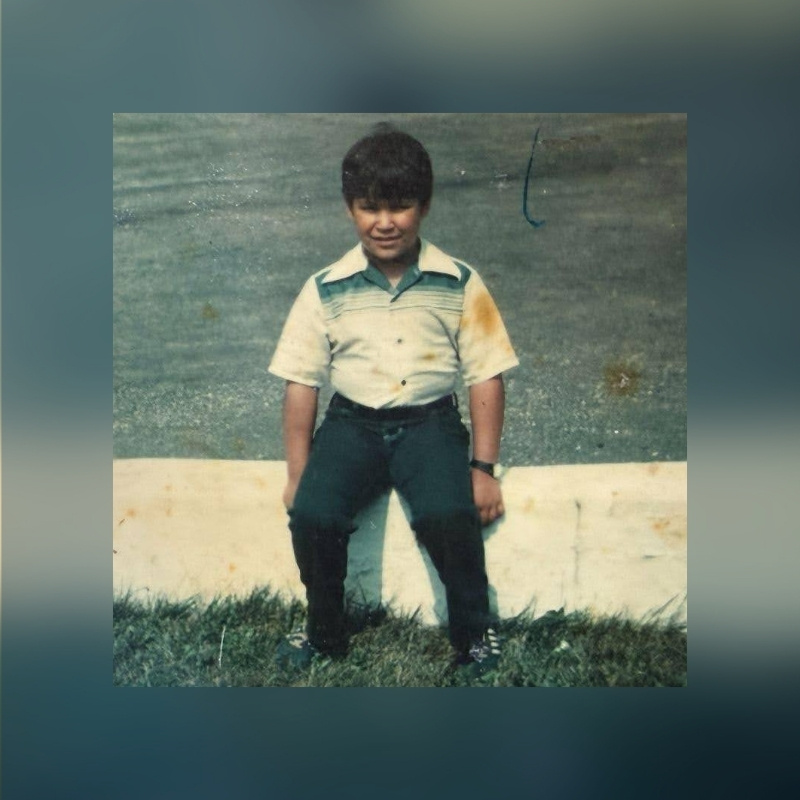
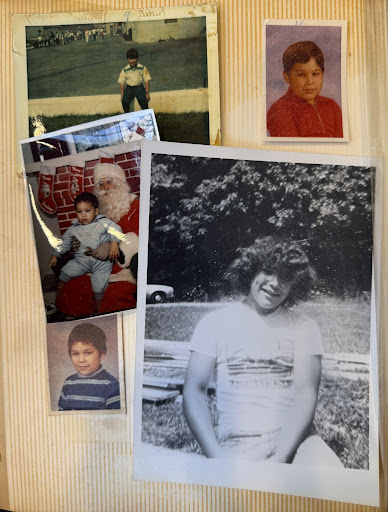
Pam Williams smiles when she talks about her big brother, Phil.
“Oh goodness. He was the best. He was, oh my goodness. Like my protector. I was everything to him,” Pam began.
He was about three years older, a big enough gap to make him a hero in Pam’s eyes, and close enough to make them playmates when they were younger.
“He was just always there running around. Having me clinging to him and teaching me things and just making sure I was not getting into trouble, but just taking care of me, just protecting me. And if I ever needed anything, he was right there. And yeah, he was, he was my life.”
He loved to sing. He even played a little guitar. Phil had this presence about him that people noticed right away.
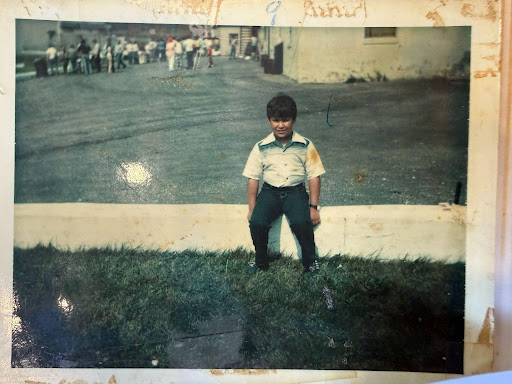
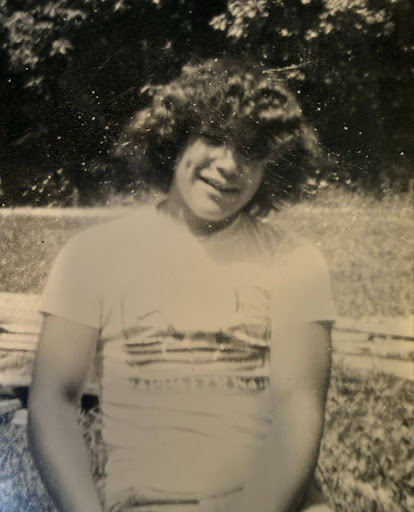
“My favorite thing was his smile. He had a beautiful smile. We’re both, because we’re Hawaiian. More dark skinned. So when he smiled, he just really lit up everything. I mean, it just, he was beautiful. He just lit up, like the whole area he was in. All the girls would come around him. And yeah, he, he attracted a lot of the females from a very young age. He had curls in his hair. Yeah, he was very nice looking.”
Phil took his role as big brother very seriously. He had to. The world they were growing up in didn’t really leave space for kids to just be kids.
“We weren’t together a lot, ‘cause we were in a broken home. Our parents were alcoholics, drug addicts, very abusive to each other. That’s why he took care of me so much.”
Their father was convicted of conspiracy to commit murder and of being an accessory before the fact to assault with intent to murder. The victim was Pam and Phil’s mother, who had been awarded custody of the kids in their divorce. Their mom survived the attack but never fully recovered. She lived nearly three decades in a nursing home.
After that, Phil and Pam were placed into the foster care system. They were sent to live with a family in Rockland, Maine. And that’s where things started to change for her big brother.
“And that’s when he started having trouble. They said behavioral trouble. We didn’t know what the trouble was.”
Phil would go into fits of rage that, now with the benefit of retrospect, may have been triggered by intense headaches. He complained of fierce pain in his head constantly. At the time, their cause was unknown and untreated.
“I just remember a lot of violence, a lot of him screaming and smashing his head on walls saying that his head hurt so bad. Begging for them to help it stop.”
Pam didn’t recognize this version of her brother.
“I just remember being scared all the time, starting to be scared of him, and it just, I didn’t know what was going on. I didn’t know why they kept saying it was his fault. He would sometimes get down and, you know, cover his head and just, I, I didn’t understand why they were saying it was his fault. It didn’t look like his fault. It looked like he was in pain.”
There was an incident of physical violence involving Phil and their foster brother. That may have been the breaking point. Pam has few memories from early childhood. After years in therapy to understand why, she’s never been able to recover them. But there are a few especially heavy moments that still float to the surface. Like the night her brother was taken from her.
“Then, yeah, just one night the police coming to our foster home and removing him.”
Phil was picked up by police and removed from the foster home. He was first sent to a youth center, and then to Sweetser – a mental health care provider – before he was placed at Elan One Corporation in Poland, Maine, most well-known simply as Elan. He was 15-years old.
What is Elan?
Pam didn’t know anything about Elan when Phil was placed there. She was told very little by the adults in her life, but everything she did hear sounded encouraging for someone like her brother.
Through some virtual digging, I came across an old brochure for Elan online. It looks like it was created sometime during or after 1985, based on dates from quotes featured inside. According to its founders and straight from the Elan brochure itself:
“…Elan is a school. It is not a correctional institution nor is it a mental hospital. It is a carefully conceptualized and caringly administered residential community for adolescents with “out of control” behavioral problems. Elan works with juveniles to help them see the causes and consequences of their conduct and then to teach them the skills of responsible living.”
“Elan was founded in 1970. It was started because there were no proper facilities for youth who did not belong in mental hospitals or in penal institutions. Those adolescents who were sent to mental institutions were not cured. They learned how to become patients. Those who were sent to juvenile justice institutions were destroyed either because they became victims of actual criminals or because they themselves became criminals.”
“Unlike the usual institutions which operate in the medical social work model or the correctional model, Elan insists that each individual is responsible for his own behavior and only grows through practicing responsibility. Elan’s philosophy insists that each person is only as sick as he or she wants to be. The community of peers isn’t fooled by the clever manipulative actions and self-defeating adolescent behaviors in the way conventional institutions have allowed themselves to be bamboozled. The Elan community will not tolerate the individual who insists upon illness. It demands that each student comes to grip with wellness.”
“Elan is highly productive. Through Elan several thousand troubled adolescents have freed themselves from alienation and confusion. Their obnoxious behavior has become unnecessary and fades away into unpleasant memory.”
As Pam remembered it, “They kept telling me that he was doing better. That yeah, they were working on his behavior. They were getting his, him treatment for his headaches.”
That was the picture Pam was given. That her brother was safe. That he was in school. That people were finally listening to him, finally helping him. That this was a place where he could get better and eventually come home. She believed she would see him again. But that didn’t happen.
“I didn’t get to see him. I didn’t get to see him. The next thing I remember is we were making him a gift box for Christmas. But it came back in the mail. And then a couple days after Christmas I was told that he had already passed and that they didn’t wanna tell me ’cause they didn’t wanna ruin my Christmas, and I lost it.”
The next time she saw Phil was at his funeral.
“ At first we were told that he had died of a brain aneurysm,” she told me.
Pam was told that he collapsed from a brain aneurysm. It was described like a ticking time bomb that no one knew had been counting down. The explanation did not make it any easier to cope with what she’d lost.
“I, um, tried to jump in the grave with him at the funeral. My dad, my foster dad had to, you know, pull me literally to the van to get me away from the graveside. Yeah. I tried to go with him. I was horrible. That moment changed me forever.”
Losing Phil altered the course of her life, and it sent her into a spiral that took many years to climb out of. Through treatment and therapy, she made progress. She found ways to navigate her grief and make peace with the Phil-shaped hole in her life. For over 30 years, Pam believed what she was told as a child about how and why her brother died. There was no reason to question it.
And then she got a call from a stranger that challenged everything she thought she knew about Phil’s death.
“ We didn’t trust him at first. We were like, you know, who is this guy Mark? And is he telling the truth?”
Phil Williams’ story continues on Dark Downeast. Press play to hear the full episode wherever you get your podcasts.
Episode Source Material
- Maine State Police Incident #SP16-019273CR2 Case File
- Elan School Brochure uploaded by user: muppeteer on Scribd.com
- The Last Stop (Documentary) directed by Todd Nilssen, 2017
- Former drug addicts fighting for lives at Elan by Robert S. Niss, Evening Express, 27 Nov 1972
- A way to rescue the kids with whom no one can cope by Geoffrey Gevalt, Lewiston Daily Sun, 31 Jul 1974
- Elan II granted license but must correct 69 violations by Geoffrey Gevalt, Lewiston Daily Sun, 14 Aug 1974
- Home to sue Illinois, UPI via The Dispatch, 1 Aug 1975
- Elan abuse charge unsupported by other evaluators by John S. Day, Bangor Daily News, 2 Aug 1975
- State to probe abuse charges at Elan center, UPI via Bangor Daily News, 12 Nov 1987
- What really happened to Phil? By Kathryn Skelton, Sun Journal, 13 Mar 2016
- Evidence lacking in inquiry of Elan death by Lindsay Tice and Kathryn Skelton, Sun Journal, 22 Feb 2017
- A lifetime of bad memories for former student by Judith Meyer, Sun-Journal, 25 Mar 2011