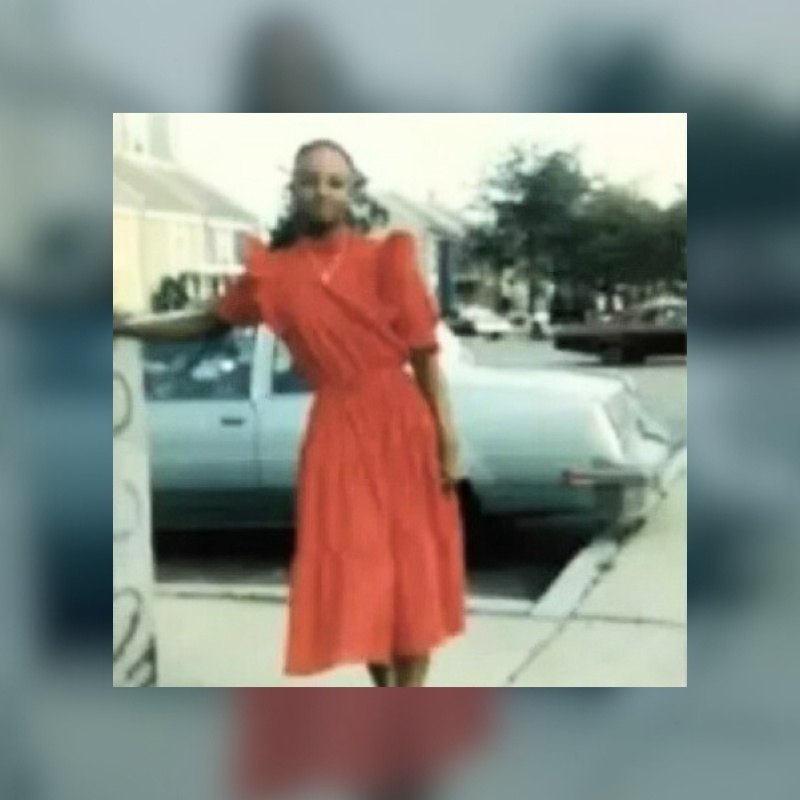
On an August evening in 1982, children playing in Boston’s Franklin Park stumbled onto a scene that would quietly become one of the city’s most troubling unsolved cases.
The victim was a 16-year-old girl who had already endured instability, displacement, and independence far beyond her years. Her murder received little attention at the time, but within months, rumors began to swirl: allegations of sexual assault inside a private police club, whispers of a cover-up, and a detective who refused to back down.
If you have any information that could help bring answers in Lucia Kai Roberts’ case, please contact the Boston Police Department at (617) 343-4470 or submit a tip through the online form.
The Discovery
It was a hot Sunday evening in Boston on August 15, 1982 and around 6:30 p.m. that night, two children were playing in Franklin Park while their family picnicked nearby. In an overgrown area of the park, those kids kicking a soccer ball made a discovery that would shift the mood of the park from late-summer ease to something far darker. It was a badly decomposed body.
Early media coverage by Ed Corsetti for the Boston Herald described the body as fully clothed and wearing a backpack.) However, later accounts reported in the Staten Island Advance by Peter Spencer suggest a more unsettling scene. The victim’s shirt was pulled up over her bra and her pants were pulled down past her thighs. She had a gold chain in her hand and her head rested on a red backpack. Around her, a suitcase, clothing, and several photographs were scattered on the ground.
Because of the state of decomposition, investigators couldn’t immediately confirm who the victim was. But those papers found near the body provided a tentative name: Lucia Roberts. Investigators believed she had been dead for at least two weeks.
The location wasn’t remote wilderness. It was directly behind an active hospital and close to the Boston Police Department’s horse stables, an area where families gathered, mounted officers patrolled on horseback, patients came and went, and foot traffic was frequent. And yet, for at least two weeks, no one had noticed the body in the brush.
Authorities positively identified the body more than a week later with assistance from the FBI fingerprint section. She was 16-year-old Lucia Kai, also known as Lucia Roberts.
The Suffolk County Medical Examiner, Dr. Leonard Atkins, ruled her death a homicide due to strangulation with a rope. In the exceptionally little media coverage of this devastating discovery, there’s no mention of sexual assault or any other circumstances of her death.
By the time Lucia’s name was made public, the story had already begun to fade from the front pages. But for her family, and for a certain Boston Police detective who had been investigating an alleged earlier incident involving his fellow brothers in blue, August 15th was only the beginning.
About Lucia
An 11-year old Lucia Roberts arrived at John F. Kennedy Airport from Monrovia, Liberia on July 13, 1977. It was the very same day that New York City experienced a massive electrical black-out, plunging the city into darkness.
Lucia’s mother Louise Roberts had asked a family friend who was visiting Liberia from the United States to take Lucia with her, hoping her daughter would have a better life than the one available in Monrovia where she was born. It was an act of trust and of hope, but according to Lucia’s mother, that hope unraveled.
In a 2007 interview with the Staten Island Advance, Louise said the woman who took Lucia in did not treat her like family. Instead, she said Lucia was treated more like a servant in the household. After several years in that household, sometime in 1982, Lucia called her mother with devastating news: she had been told to leave. There was no clear reason. She was simply no longer welcome.
Lucia shuffled around to whoever and wherever had a couch or a little space for her to stay. She went to live with a relative in Queens before eventually moving to Massachusetts with a cousin who lived in a housing project complex just south of Boston.
Though her early teenage years were rife with instability, Lucia found her footing. She was a star student at Woodrow Wilson Junior High School in Dorchester. By April 1982, she had also begun working as a clerk for Uniforce Temporaries to support herself. Her supervisor described her as attractive, dependable, and honest – so honest that she once turned in a friend who cheated on her time card. She carried that job while earning top grades at school, riding her bike to class every day.
As a young teenager, Lucia was carrying the weight of immigration, displacement, and independence far earlier than most. And then, in the summer of 1982, she was dead.
Little is publicly documented about the investigation that followed and my records requests related to her case have yet to be filled. The record, at least what remains accessible in archival media sources today, is thin. Despite the brutality of her killing – a teenage girl found strangled and left partially undressed in a public space – Lucia’s murder received limited sustained coverage.
After her identification and the medical examiner’s ruling, her name appeared in print only sporadically, but it would eventually resurface in a major way. Not because her case had been solved, but because of alarming allegations suggesting that members of the Boston Police Department may have been connected to her death.
Allegations
In 1982, Detective Richard Armstead was a Boston police officer assigned to Roxbury District Court as a police prosecutor. According to Eric Fehrenstrom’s reporting for the Boston Herald, Armstead’s role placed him inside the courthouse working cases and interacting with defendants, officers, and command staff. Armstead was no rookie; he had been on the force for years when he was confronted with a disturbing story about his fellow officers.
According to Armstead, the chain of events that began his pursuit of justice for Lucia Kai began on July 14, 1982, a month before her body was discovered.
He alleged that two teenage girls approached him at Roxbury District Court with complaints that white officers who had arrested them made obscene comments. The teenagers were Black. As reported by Steve Marantz for the Boston Globe, Armstead brought those complaints to Deputy Superintendent William Celester, who at the time was the Area B commander, which encompassed Roxbury.
What Armstead claims he heard next became the foundation for years of controversy.
According to Armstead, as he began to report alleged misconduct by his fellow officers, Celester told him to shut the door. Armstead says that during that closed-door meeting, Celester disclosed that an incident had occurred at the Silver Shield Athletic Association a week earlier.
As of 1982, the Silver Shield was a private social club for police officers located at 100 Kemble Street in Roxbury. Registered as a nonprofit in 1979, its stated purpose was to “organize and promote social and recreational programs for the youth and elderly people, in the area of Roxbury and surrounding communities.” Members said it raised money for charities.
However, anonymous officers told The Boston Globe’s Thomas Palmer that it also served as a place where police could socialize away from public scrutiny – somewhere they “wouldn’t be getting into trouble.”
It did not hold a liquor license, though members acknowledged alcohol was present and consumed on the premises, sometimes after the Commonwealth’s legal 2 a.m. closing time. If there were any actual violations at the club, enforcement would have fallen to police…The very patrons who frequented the Silver Shield.
According to Armstead’s account of what Celester allegedly told him, seven or eight officers had forced a teenage girl into sex acts inside the Silver Shield club on July 7, 1982.a)
Armstead further alleged that Boston Police Detective Jose Garcia had been asleep in another room when the sound of screaming woke him up. Armstead claimed Garcia found a Black teenage girl nude, surrounded by officers, being forced to perform oral sex at gunpoint. According to Armstead, Garcia intervened and then drove the girl away in his own car.
Armstead said he was told by Celester that Garcia asked the girl if she was a sex worker and she replied she was just 16 years old before jumping out of the car near the Orchard Park housing project in Roxbury and running away.
According to Armstead, the alleged sexual assault was reported to Celester by Detective Garcia himself.
Armstead would later say that he asked Celester why he had not been assigned to investigate the alleged sexual assault and that Celester responded someone was already handling it. Even still, Armstead was determined to track the girl down himself. He spent the next few weeks trying to find and identify the alleged victim, fearing something bad would happen to her if he didn’t find her before someone else did.
Then in mid-August 1982, Armstead heard a radio report about a teenage girl’s body found near Franklin Park. Based on her age, description, and the circumstances, he had a “hunch”, just this feeling that the girl in the park might be the same girl from the alleged Silver Shield incident.
This case continues on Dark Downeast. Press play to hear the full episode wherever you get your podcasts.
Episode Source Material
- Dead girl identified by Boston Police, Associated Press via Evening Gazette, 26 Aug 1982
- Girl’s body identified by Ed Corsetti, Boston Herald, 28 Aug 1982
- Hub after-hours clubs: Police, members only by Thomas Palmer, Boston Globe, 2 May 1983
- Activist blasts cop-rape report by Andrea Estes, Boston Herald, 28 Oct 1983
- Editorial: To find the truth, Boston Herald, 29 Oct 1983
- 2 officers’ hearing today in alleged sexual assault by Michael K. Frisby, Boston Globe, 24 Jan 1984
- Jordan: Close police clubs by Michael K. Frisby, Boston Globe, 27 Jan 1984
- Police reopen probe into assault of girl, 16, at Roxbury police club by Steve Marantz, Boston Globe, 22 Aug 1985
- New probe ordered in attack on girl at police club, The Gazette, 24 Aug 1985
- US may review Silver Shield case, Boston Globe, 12 Sep 1985
- Hub officer sees cover-up in teen’s death by Beverly Ford, Boston Herald, 10 Oct 1985
- ‘Rape’ probe rocks Boston police by Eric Fehrenstrom, Boston Herald, 20 Oct 1985
- Flynn says he’ll report on ‘82 case by Ed Quill, Boston Globe, 4 Jan 1986
- Hub to release police sex-slay probe by Brian Mooney, Boston Herald, 4 Jan 1986
- Report is due on Hub death, United Press International via Worcester Telegram, 5 Jan 1986
- Flynn to release cop report on murder/rape of teen, Associated Press via Patriot Ledger, 6 Jan 1986
- Roache clears police of rape-murder link by Brian Mooney and Timothy Clifford, Boston Herald, 11 Jan 1986
- 3 Hub police officers cleared of sexual assault by Barbara Clancy, Boston Globe, 11 Jan 1986
- Hub officers subpoenaed in ‘Silver Shield slay-case’, Associated Press via Boston Herald, 19 Nov 1986
- Jury reportedly to probe alleged rape by William F. Doherty, Boston Globe, 19 Nov 1986
- Silver Shield probe rapped by Eric Fehrnstrom, Boston Herald, 20 Nov 1986
- 3 cops reportedly told of alleged rape, Associated Press via Patriot Ledger, 3 Dec 1986
- 4 more Hub officers testify in alleged rape at club by William F. Doherty, Boston Globe, 4 Dec 1986
- Officers testify in alleged club rape, Boston Herald, 20 Dec 1986
- No indictments sought after police club probe by William F. Doherty, Boston Globe, 24 Mar 1987
- Probe of alleged police assault dropped by Jim Schuh, Patriot Ledger, 24 Mar 1987
- Probe: No charges in police club rape by Eric Fehrnstrom, Boston Herald, 24 Mar 1987
- Federal police probe ends, Associated Press via Transcript-Telegram, 24 Mar 1987
- Fourth rape probe falls short of mark, Associated Press via Springfield Union, 25 Mar 1987
- Feds clear police, Boston Globe, 29 Mar 1987
- Police club liquor license is suspended for 30 days by M.E. Malone, Boston Globe, 6 May 1987
- Mass. man charged in hooker operations, United Press International, 21 Oct 1994
- Sex-club defendant cites ‘84 deal to discredit case by Elizabeth Dinan, Portsmouth Herald (Seacoast Online), 27 May 2005
- A daughter murdered: Justice pursued from here to Boston by Peter Spencer, Staten Island Advance, 5 Aug 2007
- Hub slaying still haunts those pursuing suspects by Maria Cramer, Boston Globe, 26 Sep 2007
- Press Conference, WGBH 10 O’Clock News, 10 Jan 1986
- Silver Shield Rape Case by David Boeri, WGBH 10 O’Clock News, 18 Nov 1986
- Silver Shield Rape Case by David Boeri, WGBH 10 O’Clock News, 2 Dec 1986
- Silver Shield Rape Case by David Boeri, WGBH 10 O’Clock News, 19 Dec 1986
- Silver Shield Rape Case by Christy George, WGBH 10 O’Clock News, 24 Mar 1987
- Police won’t probe club, Boston Globe, 23 Oct 1992
- Award is made in civil rights case, Boston Globe, 20 Apr 1993
- 4 from massage parlor arraigned on prostitution charge by Patricia Nealon, Boston Globe, 11 Nov 1993
- Saugus resident accused of running Roxbury brothel, The Daily Item, 12 Nov 1993
- 3 men tied to brothel in Roxbury sentenced by Matthew Brelis, Boston Globe, 21 Mar 1995
- Saugus man, companions fined for running brothel, The Daily Item, 21 Mar 1995
- Officers defend actions in raid of wrong home by Patricia Nealon, Boston Globe, 7 May 1997
- James Jones wants his cash back by Dick Lehr, Mitchell Zuckoff, and Gerard O’Neil, Boston Globe, 3 Sep 1997