
Fifty years after James Cassidy’s death, there is still no simple explanation for his brutal murder. The evidence left behind in the Maine woods raised questions investigators have never fully answered. And the deeper the investigation went, the more complicated the picture became.
A respected bank executive had vanished, federal authorities were preparing to arrest him, and a burned car was found far from home on a deserted logging road. But the paper trail and the witness accounts pointed in several directions at once – toward financial crimes, toward organized crime figures operating in New England, and toward the surprisingly valuable world of rare stamps.
Somewhere among those threads may lie the explanation for what really happened all those years ago in April of 1976.
If you have any information about this case, please contact the Maine State Police, Major Crimes Unit – North at (207) 973-3750, or use their toll-free line at 1-800-432-7381. You can also submit information anonymously by using the tip form.
The Case So Far
On April 7th, 1976, investigators in eastern Maine received a call about a burned-out station wagon hidden off a remote logging road near DeBec Pond. When they finally located the scene, they found the badly burned body of 43-year-old James “Jim” Cassidy of Brookline, Massachusetts, a bank vice president and father of three.
The fire had been extremely intense, destroying much of the evidence and making it difficult to determine exactly what had happened. The autopsy ultimately concluded that Jim died from burning. Today, Jim’s death is considered an unsolved homicide by Maine State Police.
By the time the car was discovered, Jim had already been missing for several days. Federal authorities had also obtained a warrant for his arrest on embezzlement charges connected to his job at Brookline Trust Company, allegations his sister-in-law Evelyn Cassidy still has a hard time believing.
“We couldn’t imagine Jim being involved in anything like that voluntarily. But see that word voluntarily was in there,” Evelyn said, “We don’t know.”
Investigators were left trying to reconcile the violent way Jim died with the life he had been living. What was Jim wrapped up in before his death? Was his death the result of risky dealings at the bank, or was it motivated by something much smaller, like stamps?
According to reporting by Richard J. Connolly for the Boston Globe, Jim was believed to have been carrying approximately $350,000 worth of rare stamps when he left Massachusetts, and those stamps were unaccounted for at the scene.
Rare stamps carry significant value even today, and the market for those collectibles has occasionally intersected with criminal activity. Because individual items can be worth large sums and are relatively easy to transport or resell, they became targets for theft or trafficking during Jim’s era.
In 1971, for example, members of Boston’s Winter Hill Gang stole a stamp collection worth about $500,000 from a Boston stamp business and later moved the stolen collectibles through other stamp dealers.
Joseph McDonald was indicted in 1975 for his alleged part in the theft, but failed to appear for trial so a warrant was issued for his arrest. He was placed on the FBI’s 10 Most Wanted List in April of 1976 and was classified as armed and extremely dangerous. This guy with a passion for high-value stamp theft was on the lam the same month Jim was killed. And he wasn’t the only one.
That history raised another possibility in Jim Cassidy’s case: if he had encountered people operating in dark arenas, maybe stamps were the common denominator.
Stamps & Organized Crime Intertwined
Jim’s philatelic passion – the formal term for stamp collecting and the study of stamps – began in his childhood.
“ I always thought it was really cool ’cause he started this when he is really young,” Evelyn shared, “And I remember one time at the house – I live in a house now in Canada where he grew up –I found a thing in the attic and it was maybe a three by three piece of wood, it had little slots in it. And I remember my husband telling me that Jim had made that for stamps so it would hold stamps so you could see them all.”
Jim’s son Ken Cassidy remembers his father’s stamp business fondly. He even got to participate.
“He was heavily into stamps,” Ken remembered. One of the things that I enjoyed the most was the fact that he would come home with envelopes from other people and countries and stuff. My job and he – I don’t know whether, how much per stamp – I’d soak them in water and then take the stamp and the stamp fell off the envelope. Just take ’em and put ’em on newspaper, put ’em out to the side to dry. And then obviously give them back to him later.”
The self-named business James A. Cassidy Inc. had started modestly as a mail-order stamp and rare coin company. Jim first ran it out of his home in Brookline, Massachusetts, but by 1973 he expanded into a Boylston Street office in Newton. The move suggested growth. Reporting by Jeff Strout for the Bangor Daily News indicated Jim had even purchased a mini-computer for the operation and employed several people to help run the business.
“Jim never talked about having valuable stamps or anything like that,” Evelyn said, “He said how he enjoyed getting them from different places and how some were rare and how they’d be worth more money. But he never mentioned anything about the value of them.”
Yet they were extremely valuable. A single rare stamp could fetch thousands of dollars or more.
According to reporting by David Bright and Jeff Strout for the Bangor Daily News, after Jim died, a friend of Jim’s made a payment of more than $10,000 to Jim’s stamp and coin business. That friend was reportedly the same man who told investigators he had seen and spoken with Jim at the Portland Jetport on April 5th.
“ The last man to see my father alive was John Head. I remember that particular name,” Ken said.
Reporting in the Rumford Falls Times from December 1976 described someone named John Head as an “internationally known” stamp collector. According to an obituary I found for John B. Head from Bethel, Maine, after he returned from military service in Japan, John started a business dealing in the “philately and postal history of the Far East, specializing in Japan and the Ryukyus.”(58)
I wanted to learn more about John Head and just how well-known he was in the stamp world, but I struggled to find any information about him in even the most obscure and super niche sources. I even spoke with the president of the Maine Philatelic Society as part of my reporting for this episode and he remembers the name John Head, but wasn’t sure if they ever met.
But Evelyn believes she met John and his wife at least once, and the tone of that meeting always struck her as odd. She recalled that she attended a dinner meeting with Jim sometime in the early 70s, maybe 4 or 5 years before his death when she was staying with his family in Brookline one summer. At the time we spoke, she couldn’t recall the names of the man and woman at the table, but based on what she does remember and after speaking with her nephew Ken, she now is fairly certain the meeting was with John Head.
“One time that summer, the early seventies when I visited Jim, he had to go to a meeting with someone at a restaurant and wanted me to come with him,” Evelyn remembered, “We ate first and then, very strange, uncharacteristic of Jim, he said Evelyn, will you excuse us? We need to talk for a bit.”
She continued, “So, there was a lady with the other gentleman, and she was Japanese. So her and I left the table and that was not like Jim at all.”
John Head’s wife, Fumiko, was from Japan. They were married in 1960 at the American Embassy in Tokyo. It’s this detail in particular that leads us to believe that the meeting was with John and his wife.
“But that was just very unlike him…I’m like to myself, I never asked them, but like, what could you be talking about stamps that I couldn’t hear? What would I care?” Evelyn said.
It could have been nothing at all, just a slightly out of character moment for Jim asking his sister-in-law for a little space to hold a private conversation with a business contact. But she hasn’t forgotten it more than 50 years later, and it keeps surfacing in her mind like it means something more to Jim’s case than she can decipher without the full picture.
John Head has never been identified as a suspect or person of interest in Jim Cassidy’s case. He is believed to be one of the last known individuals to see him alive, and so no doubt he was a valuable witness and he may have known much more about Jim’s stamp dealings than has ever been publicly shared. John died in 2008 and Fumiko passed away in 2025, so I can’t talk to either of them for clarity on any of this.
For now, we’ll leave John Head where he stands. But another thread keeps drawing me back – one that leads further into the peculiar, obsessive world of stamps. The deeper it goes, the more it suggests that Jim’s case may intersect with something much larger… and far more dangerous.
Part Two of James Cassidy’s story continues on Dark Downeast. Press play to hear the full episode wherever you get your podcasts.
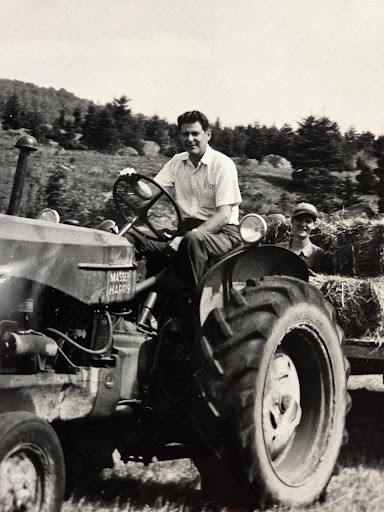
James “Jim” Cassidy at the family farm in Canada. Source: Evelyn Cassidy
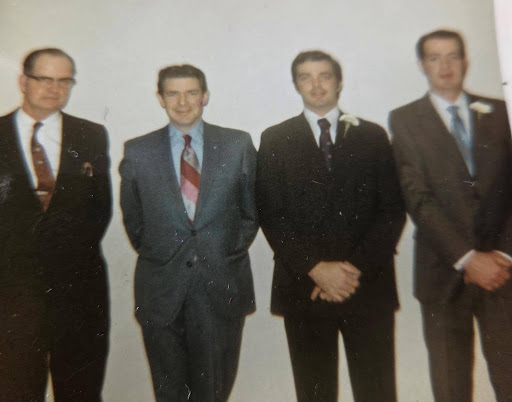
Jim Cassidy (second from left) with his father and brothers. Source: Evelyn Cassidy
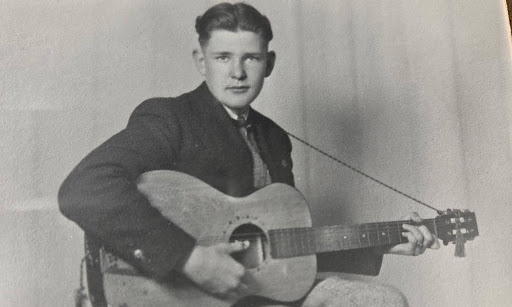
As a young man, Jim played guitar at dances and other gigs across the country to pay for teaching school. Source: Evelyn Cassidy
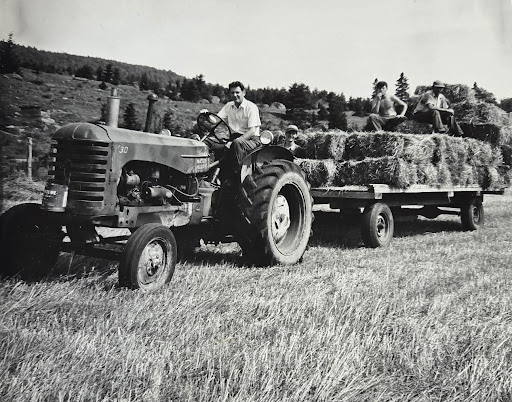
Hauling hay with his family on the family farm. Source: Evelyn Cassidy
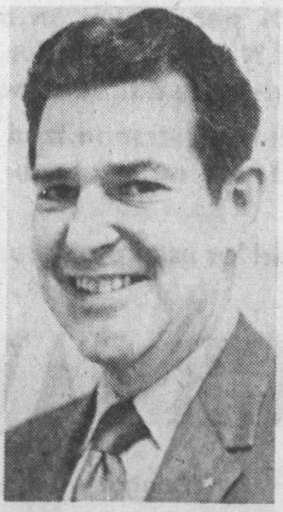
James “Jim” Cassidy. Source: Bangor Daily News
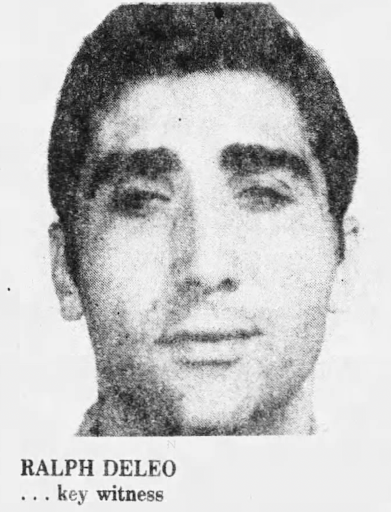
Ralph DeLeo was questioned about two of his friends who were seen in the area around the time of Jim’s death. Source: Boston Globe
Episode Source Material
- Police Beat: Police fail to find corpse, Bangor Daily News, 8 Apr 1976
- Police seek identity of burned body by Jeff Strout, Bangor Daily News, 9 Apr 1976
- Identity test begun on burned body, Associated Press via Evening Express, 9 Apr 1976
- Burned body found down east believed to be Mass. banker, Associated Press via Kennebec Journal, 9 Apr 1976
- Body is tentatively identified, UPI via The Times Record, 9 Apr 1976
- Burned body may be banker sought in Brookline larceny by Robert J. Anglin, Boston Globe, 9 Apr 1976
- Charred body may be banker sought in Brookline theft by Robert J. Anglin, Boston Globe, 9 Apr 1976
- Body is identified as missing banker by David Bright, Bangor Daily News, 10 Apr 1976
- Crime scene in Aurora, Maine 1976 (YouTube video) by Don Carrigan/WLBZ, archived and digitized by Northeast Historic Film, Apr 1976
- Banker found in car died of burns by Jerry Harkavy, Associated Press via Morning Sentinel, 10 Apr 1976
- Banker sought by FBI found dead, UPI via Morning Union, 10 Apr 1976
- Burned body that of missing banker by Robert J. Anglin, Boston Globe, 10 Apr 1976
- Me. probe continues into banker’s death, Associated Press via Lewiston Daily Sun, 11 Apr 1976
- Maine steps up probe of Mass. banker’s death by Arthur Jones, Boston Globe, 11 Apr 1976
- $1.17m reported lost in Brookline embezzlement by Gary Kayakachoian, Boston Globe, 12 Apr 1976
- Bank official who died in flames ran coin firm by Jeff Strout, Bangor Daily News, 15 Apr 1976
- Fire death of banker may be murder: Cohen, Associated Press via Evening Express, 15 Apr 1976
- Sum in Amherst death seen as “much greater”, Ellsworth American, 15 Apr 1976
- Cohen tends to believe fire death a homicide by Jeff Strout, Bangor Daily News, 16 Apr 1976
- Charred corpse still baffles local police by Jeff Strout, Bangor Daily News, 20 Apr 1976
- Cassidy fire death still a local mystery, Ellsworth American, 22 Apr 1976
- Official denies strangling report by David Bright and Jeff Strout, Bangor Daily News, 23 Apr 1976
- Police still seek answers in Cassidy death by Jeff Strout, Bangor Daily News, 26 Apr 1976
- Cassidy death “suspicious”, but no clues appear, Ellsworth American, 6 May 1976
- Cassidy death probe ‘pointing to homicide’ by Jeff Strout, Bangor Daily News, 5 Jun 1976
- Mass. man witness in Ohio death case by Richard J. Connolly, Boston Globe, 6 Nov 1978
- DeLeo friends sought in ‘76 banker slaying by Richard J. Connolly, Boston Globe, 6 Nov 1978
- Mass. fugitive a key in Ohio murder probe: Two DeLeo friends sought by Richard J. Connolly, Boston Globe, 7 Nov 1978
- Eight deaths since 1974 have been treated as homicides by Pat Flagg, Ellsworth American, 1 Jul 1982
- Closure? by Jesse Ellison, Down East Magazine
- Worcester, Wayne, Randall Richard, and Tim White. 2016. The Last Good Heist: The Inside Story of the Biggest Single Payday in the Criminal History of the Northeast. Globe Pequot Publishing.
- Episode 284: Into the Vault, Criminal Podcast, 13 Sep 2024
- UST plans acquisition, Boston Globe, 2 Apr 1976
- Pine Tree Coin Club plans show, Bangor Daily News, 2 Apr 1976
- Robbery reward offered, Bangor Daily News, 22 Apr 1976
- Belle Island arson, Kennebec Journal, 11 Nov 1976
- 4 held in brawl, shooting, police assault outside Revere cafe, Boston Traveler, 13 Feb 1962
- Artist-Author Emily Carr honored by Canada by Lloyd G. Williams, The Morning Union, 31 Jan 1971
- Informer credited with indicting 26, Boston Record American, 28 Jul 1971
- Newton man, ex-official of Hub bank, shot to death by Robert L. Ward, Boston Globe, 17 Dec 1973
- Diary people quizzed in Hub slaying, Boston Globe, 18 Dec 1973
- 700 attend funeral rites for Morse, Boston Globe, 18 Dec 1973
- Police seek ‘pro’ in banker slaying by Robert L. Ward, Boston Globe, 4 Jan 1974
- Prisoners learn skills in state hospital work by Bruce McCabe, Boston Globe, 21 May 1974
- Norfolk inmates ‘graduate’, Boston Herald, 9 Aug 1974
- After a year, banker’s murder still a puzzle by Richard Connolly, Boston Globe, 19 Dec 1974
- “Model jail prisoner” missing for six weeks, The Recorder, 15 Aug 1975
- Thieves may have netted $3 million, Associated Press via Athol Daily News, 12 Nov 1975
- Police capture jail escapee, The Recorder, 3 Jan 1976
- Victim clings to ring, cops cling to suspects, The Daily Item, 13 Apr 1976
- Robbery suspect arrested, The Daily Item, 5 May 1976
- Two men get 25-40 years in Revere robbery, kidnap, The Daily Item, 3 Jul 1976
- Photo: Anthony Chiodi, The Morning Union, 24 Oct 1976
- SAD 44 may be included in network of community councils by John G. Ferland, Rumford Falls Times, 30 Dec 1976
- COMMONWEALTH vs. FRANK GOLDMAN. (and three companion cases [Note 1]). 5 Mass. App. Ct. 635, September 15, 1977 – October 6, 1977, Suffolk County
- Commonwealth vs. Frank Goldman, 12 Mass. App. Ct. 699, October 14, 1981 – December 3, 1981, Suffolk County
- Obituary: John B. Head, Chandler Funeral Homes and Cremation Service, 25 Mar 2008
- Randolph man pleads guilty to racketeering charge, FBI Boston Division, U.S. Attorney’s Office: District of Massachusetts, 30 May 2012
- Fatal Battleground Avenue collision kills Fumiko Head on January 6, 2025, Rosensteel Fleishman, 10 Jan 2025
- Woman, 87, dies after wreck on Battleground Avenue by Susie C. Spear, News and Record, 11 Jan 2025
- Judge weighing detention of Boston mobster accused of plotting to kill federal officials by Charlie McKenna, The Republican, 27 Jun 2025
- Former mafia ‘street boss’ allegedly plotted to kill feds, prosecutors say by Aaron Katersky, ABC News, 22 May 2025
- Former Mafia ‘street boss’ arrested for allegedly violating probation by Shelley Murphy, Boston Globe, 15 May 2025
- Most wanted refuses to appear, Associated Press via Athol Daily News, 17 Sep 1982